Progressive Slots
What Are Progressive Slots?
Progressive slots are casino games in which a portion of every real-money wager is directed into a shared jackpot pool that grows continuously until a single player triggers the winning combination and claims the full accumulated total. Unlike fixed jackpot slots — where the maximum prize is defined at the point of certification and does not change between triggers — the top prize in progressive slots has no fixed ceiling. It compounds with every qualifying stake placed across every operator carrying the game, potentially accumulating into life-changing sums before a trigger event resets it to a seeded minimum value.
The category covers several structural variants. Standalone progressives accumulate only from wagers placed on a single game instance at a single operator. Local progressives pool contributions from multiple game instances within a single casino platform. Wide-area or networked progressives — the most commercially prominent type — pool contributions from every licensed operator carrying the game, meaning a player at one UK casino is contributing to the same jackpot pool as players at dozens of other platforms simultaneously. It is the networked structure that produces the multi-million pound headline figures associated with titles like Mega Moolah.
To qualify for this category, a title must carry a certified progressive pool mechanic, hold a current UKGC certification from an accredited laboratory — eCOGRA, GLI, or BMM Testlabs — and be actively deployed at a UK-licensed operator. The progressive pool architecture and contribution rate must be disclosed in the game's certification documentation and verifiable from the in-game paytable.
Best Progressive Slots in the UK Right Now
Mega Moolah
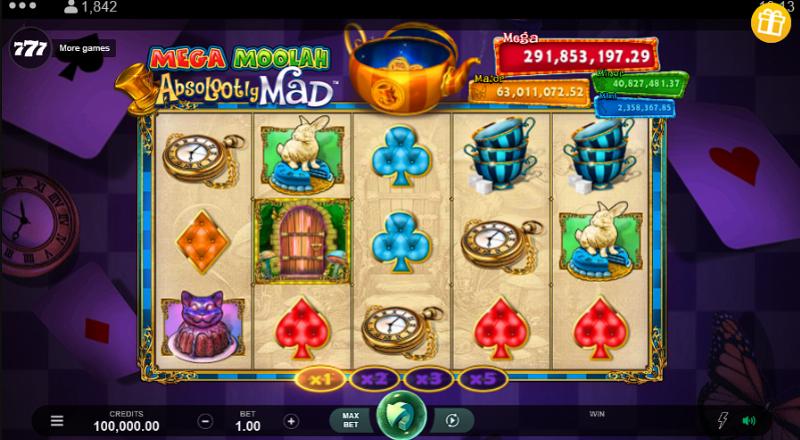
Mega Moolah is a Microgaming release and the most commercially recognised networked progressive slot in the UK market. The game runs on a 5x3 grid with 25 paylines and an African safari theme. The progressive element operates through a four-tier jackpot wheel: Mini, Minor, Major, and Mega. The jackpot wheel is triggered randomly during base play — any spin at any stake level can activate it, with higher stakes increasing the probability of wheel activation without guaranteeing it. Once triggered, the wheel spin determines which of the four prize tiers is awarded. Published RTP is 88.12%, which is substantially below the standard UK slot market range. This figure includes the jackpot contribution — a meaningful portion of every stake feeds the progressive pool rather than the base-game return. UK players should understand that the 88.12% RTP means the base-game return before any jackpot award is considerably lower than the certified figure suggests in standard session play. Mega Moolah has produced multiple verified payouts in excess of £10 million across its networked distribution history.
Divine Fortune
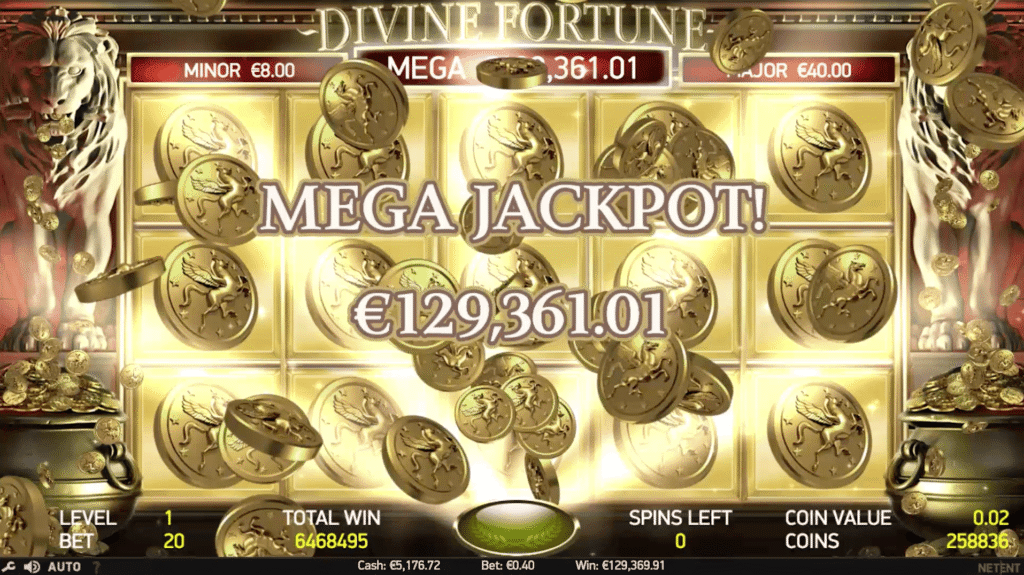
Divine Fortune is a NetEnt release running on a 5x3 grid with 20 paylines and a Greek mythology theme. The game features three internal progressive jackpots — Minor, Major, and Mega — triggered through a dedicated jackpot bonus wheel that activates when three jackpot scatter symbols land simultaneously during base play or free spins. The free spins round includes an expanding wild mechanic. Volatility is medium. Divine Fortune's jackpot architecture is local rather than networked at the operator level in most deployments — the three progressive tiers accumulate from wagers at the specific operator rather than across the entire Microgaming or NetEnt network, which means jackpot values are considerably more modest than Mega Moolah's networked pool but also reset and re-accumulate more frequently. UK players seeking progressive exposure without committing to the multi-year accumulation cycles of the largest networked titles will find Divine Fortune a more accessible entry point.
Hall of Gods
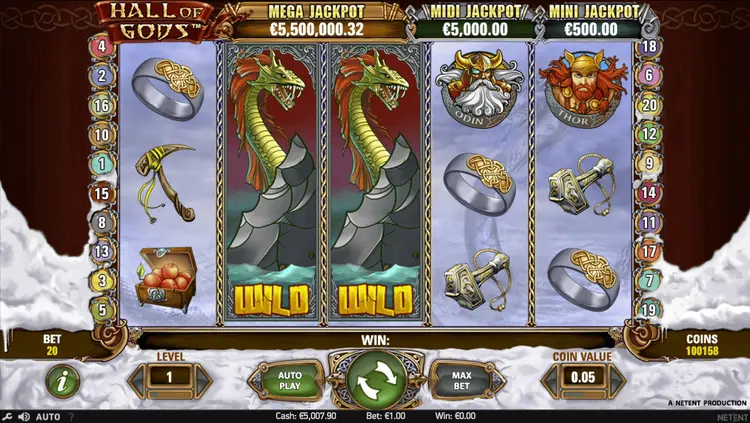
Hall of Gods is a NetEnt release running on a 5x3 grid with 20 paylines and a Norse mythology theme. The game features three networked progressive jackpots — Midi, Maxi, and Mega — triggered through a pick-and-click shield bonus activated by three bonus scatter symbols. Players select from a grid of shields to reveal matching symbols; three matching shield symbols award the corresponding jackpot tier. The Mega jackpot in Hall of Gods has historically accumulated into the multi-million pound range before triggering, consistent with the networked structure. Volatility in base play is medium. The pick-and-click jackpot trigger mechanic differs from Mega Moolah's wheel spin approach and gives players slightly more interaction with the jackpot stage, though the outcome remains determined by the certified RNG rather than player skill. For UK players interested in networked progressive titles beyond the Microgaming network, Hall of Gods represents NetEnt's most prominent contribution to the wide-area jackpot category.
Age of the Gods
Age of the Gods is a Playtech series title — one of several releases sharing the same four-tier networked progressive jackpot pool across the Age of the Gods brand. The jackpot network is one of the largest operated by any single studio in the UK licensed market, covering multiple thematically distinct releases that all feed the same Power, Super Power, Ultimate Power, and Ultimate jackpot pool. The jackpot trigger is random — any spin at any stake level may activate a jackpot selection round. Because multiple titles feed a single pool, the network's contribution volume is higher than any single-title progressive at equivalent player counts, which influences the accumulation rate of the shared jackpots. Individual Age of the Gods titles run across various grid formats and feature structures — Greek mythology themes, multiple bonus mechanics — but the defining characteristic for UK players is participation in the shared networked pool rather than any single title's base-game design.
Major Millions
Major Millions is a Microgaming release and one of the longest-running online progressive slot titles in continuous UKGC-certified distribution. The game is available in both a three-reel and a five-reel format. The five-reel version runs on a 5x3 grid with 15 paylines and a military theme. The jackpot triggers by landing five Major Millions symbols on the maximum payline during maximum-coin play — a defined combination requirement rather than a random wheel trigger, which distinguishes it mechanically from Mega Moolah. This means the jackpot cannot be won below maximum stake, an important practical consideration for bankroll planning. Published RTP figures for Major Millions are below the standard market range, consistent with the jackpot contribution structure common across Microgaming's networked progressive catalogue. Major Millions is included here not for base-game innovation — the format is deliberately classic — but for its historical significance as one of the first online slots to demonstrate the networked progressive model at scale.
Jackpot King
Jackpot King is Blueprint Gaming's proprietary progressive overlay system, applied across a wide range of host titles in the Blueprint catalogue rather than operating as a standalone game. Titles carrying the Jackpot King mechanic include Ted Jackpot King, Fishin' Frenzy Jackpot King, and a rotating selection of other Blueprint releases. The Jackpot King overlay functions independently of the host game's base mechanics — symbols collect into a crown meter during play, and a filled meter triggers a prize wheel spin with three progressive tiers: Regal Spins, Super Wheel Spin, and Jackpot King. Because the overlay sits across multiple host titles simultaneously, players can access the Jackpot King network from whichever Blueprint title they prefer. The progressive pool is networked across all Jackpot King-carrying operators in the UK licensed market. For UK players who want progressive exposure from within a familiar game mechanic rather than a standalone progressive title, the Jackpot King overlay format represents the most accessible entry point in this category.
How Progressive Slots Are Built and Distributed
The progressive pool architecture behind networked progressive slots is fundamentally different from any other slot mechanic in the UK certified market. Rather than a fixed return distributed across certified play, a portion of each real-money wager — typically between 1% and 3% of every stake — is diverted from the base-game return and contributed to the shared jackpot pool. This diversion is fixed at the firmware level and certified by the testing laboratory as part of the overall game certification. It is the direct cause of the below-market base-game RTP common across progressive slots: a title contributing 2% of every stake to the jackpot pool has 2% less available to distribute through standard base-game and feature payouts.
When a jackpot is triggered and the full accumulated pool is paid, the pool resets to a certified seed value — a defined minimum from which accumulation begins again. The seed value is typically funded by the studio or network operator as a commercial commitment, ensuring the jackpot never starts from zero after a reset. Wide-area networks accumulate faster than standalone or local progressives because the contribution volume reflects player traffic across every operator carrying the game simultaneously.
Certification covers the full progressive architecture: the contribution rate, the trigger probability, the jackpot tier structure, and the seed value. UKGC-licensed operators must display the current live jackpot value within the game interface and cannot modify the contribution rate post-deployment without triggering full recertification. For players tracking how new networked titles enter the UK market and which studios are building progressive systems, the new slots section covers recent certified releases as they become available across UK platforms.
What Defines a Slot in This Category
Hit Frequency and Bonus Triggers
Progressive slots span a wide range of base-game hit frequencies, but the jackpot trigger itself is the most consequential distributional event and occurs at probabilities far below any standard bonus round. On major networked titles, the probability of triggering the top jackpot tier on any individual spin is typically in the range of one in several million to one in tens of millions. Base-game hit rates follow the underlying game design — Mega Moolah operates on a medium-volatility base-game framework, while other progressive titles vary from low to high volatility in their standard reel mechanics. The jackpot trigger is a separate random event overlaid on top of base-game play and is not influenced by base-game win frequency.
Max Win Bands
The defining characteristic of progressive slots is the absence of a fixed max win ceiling. Unlike certified fixed-jackpot titles — where the maximum payout is defined and certified at a specific multiplier — networked progressives accumulate without a contractual upper limit. Historical payouts on Mega Moolah have exceeded £20 million from a single jackpot trigger. The trade-off is the compressed base-game return caused by jackpot contributions. Players choosing progressive slots for max win potential are exchanging base-game RTP efficiency for exposure to an uncapped jackpot event at very low probability. For players whose priority is base-game return rather than jackpot exposure, the high RTP slots section covers the highest-return alternatives currently available at UKGC-licensed operators.
Stake Ranges and the £5 Bonus Cap
Minimum stake for most progressive slots is £0.10 per spin at UKGC-licensed operators. Some titles — Major Millions specifically — require maximum coin play to be eligible for the top jackpot tier, which means lower stakes may provide base-game play without full jackpot eligibility. Players should confirm jackpot eligibility thresholds in the in-game information panel before starting play. The UKGC's £5 per spin stake cap applies during any active promotional bonus period across all UKGC-certified titles including progressive slots. For progressive titles played at stakes near or above £5 per spin, this cap limits bonus-attached play but does not restrict deposit-only sessions.
Mobile and Accessibility Standards
All progressive slots covered in this article are built in HTML5 and fully compatible with iOS and Android mobile browsers. Portrait and landscape orientations are supported. UKGC certification standards require Spin and Auto-Spin controls to meet screen-reader accessibility requirements on all newly certified titles and through recertification cycles on qualifying legacy games. The live jackpot value display — a mandatory disclosure requirement for UKGC-licensed operators — renders within the game interface on mobile devices without requiring a desktop view. Players whose primary access to progressive slots is via phone or tablet will find further platform-specific performance context in the mobile slots section.
Common Misconceptions About Progressive Slots
The most widely held misconception is that a progressive jackpot becomes more likely to trigger as it grows larger, or that a jackpot which has not paid for an extended period is statistically overdue. Neither is accurate. The jackpot trigger probability on any individual spin is fixed in the game firmware and certified by the testing laboratory — it does not change based on the current pool size, the time elapsed since the last trigger, or how many players are simultaneously active on the network. Each spin is an independent RNG event. The accumulating jackpot value reflects increasing contribution volume, not increasing trigger probability.
A second misconception concerns the advertised RTP of progressive slots. Players who see a published RTP of 88.12% for Mega Moolah and compare it directly against a 96% standard slot are making a mathematically valid comparison for base-game return, but they may not account for the fact that the progressive RTP figure includes the jackpot contribution. A player who triggers the Mega jackpot receives a return on their historical wagering that may substantially exceed any standard-slot equivalent. The 88.12% is an accurate long-run average across all players — but its distribution between jackpot winners and all other players is radically skewed toward the former.
A third error concerns stake level and jackpot eligibility. Some players assume that minimum-stake spins carry the same jackpot exposure as maximum-stake play. This varies by title. Major Millions requires maximum coin play to access the top jackpot tier. Other titles — Mega Moolah, Divine Fortune — allow jackpot triggers at any stake level, with higher stakes increasing trigger probability proportionally. Confirming the specific eligibility rules for any progressive title before starting is essential, particularly for players who prefer low stakes for base-game bankroll management purposes.
Picking the Right Progressive Slots for Your Bankroll
£20–£50 Weekly Budget
At this budget level, progressive slots present a specific tension. The jackpot potential that defines the category is statistically remote regardless of budget — a player spending £30 per week on Mega Moolah is not meaningfully closer to a jackpot trigger than a player spending £300 per week over the long run, given the trigger probabilities involved. The practical consequence is that a small weekly budget committed to progressive slots is absorbing the below-market base-game RTP without proportionally meaningful jackpot exposure. Players at this tier who want progressive participation are best served by minimum-stake play — £0.10 per spin — across sessions where the entertainment value of jackpot eligibility is treated as the primary benefit rather than an expected return event. Divine Fortune's local progressive structure, with smaller and more frequently triggered jackpot tiers, may suit this budget better than a wide-area networked title.
£100–£300 Weekly Budget
Mid-range budgets allow for sustained progressive play at low stakes across multiple weekly sessions. At £0.20 to £0.50 per spin on Mega Moolah or Hall of Gods, a £100 weekly fund provides 200 to 500 base spins — sufficient session volume for meaningful base-game play alongside jackpot eligibility. The Jackpot King overlay titles are accessible at this tier through host games that carry their own base-game RTP independently of the overlay, giving players a combined progressive exposure and standard-game entertainment package. Players at this budget should view progressive slots as a portion of weekly play rather than the entirety of it — mixing sessions on standard high-return titles reduces the RTP drag from progressive contributions across the week as a whole.
£500+ Weekly Budget
At higher bankroll levels, progressive slots become viable as a sustained component of a broader session strategy rather than a marginal addition. Higher-stake play on networked progressive titles increases jackpot trigger probability proportionally — at £2 per spin versus £0.20 per spin, the probability of a jackpot wheel activation on any given spin is ten times higher, though the absolute probability per spin remains remote. Age of the Gods' multi-title networked pool is accessible across several host games at this budget, allowing players to move between titles within the same network without interrupting their contribution to the shared progressive. The UKGC's £5 bonus cap during active promotional play applies at this tier as at all others — progressive play above £5 per spin should be conducted on deposit-only sessions to avoid the cap constraint.
Bankroll and Session Strategy
The 1% Stake Rule Applied
Base stake at no more than 1% of session fund applies as a standard framework for progressive slots as it does for any other category, with one practical adjustment. Because progressive slots carry lower base-game RTP than standard titles due to jackpot contributions, the expected loss rate per spin at any given stake is higher than on a 96% RTP title at equivalent stake. A player sizing stake at 1% of session fund on Mega Moolah is absorbing a higher theoretical house edge per spin than the same sizing on a standard-return title. Tightening to 0.5–0.75% of session fund when playing progressive slots compensates for this elevated base-game cost while maintaining jackpot eligibility. For very high volatility progressive titles, tighter sizing remains appropriate on the same basis as any other high-variance game.
Demo Mode Before Deposit
Most progressive slots are available in demo mode at UKGC-licensed operators, though the progressive jackpot element is typically not active during demo play — the jackpot cannot be triggered or won using demo credits. Demo mode for progressive titles provides useful familiarity with the base-game mechanic, bonus round structure, and jackpot trigger presentation without delivering real jackpot exposure. Players new to the Age of the Gods series or to the Jackpot King overlay mechanic should use demo sessions to understand how the jackpot trigger initiates before committing real money. For titles where demo jackpot inactivity means the game plays materially differently than real-money mode — particularly those where jackpot symbols appear frequently in base play — this distinction should be factored into session expectation management.
Why Betting Systems Don't Work
No staking pattern modifies the jackpot trigger probability of a UKGC-certified progressive slot. The trigger event is a fixed-firmware RNG outcome independent of stake history, session length, or wager sequence. Increasing stake after a losing sequence does not improve jackpot trigger probability beyond the proportional relationship between stake size and wheel activation chance documented in the game's certified specification. The concept that a progressive jackpot is statistically overdue after a long accumulation period — and therefore more likely to trigger soon — is mathematically unfounded. Each spin is independent. The jackpot's size reflects accumulated contributions, not accumulated probability.
Leading Providers Behind Progressive Slots in 2026
Microgaming
Microgaming operates the most commercially significant networked progressive infrastructure in the UK licensed slot market. The Mega Moolah network has produced more verified million-pound-plus jackpot payouts than any other progressive system in UKGC-regulated distribution, and Major Millions represents the studio's legacy contribution to the earliest phase of online progressive design. Microgaming's progressive network distributes across its operator software platform and through third-party content agreements, giving the Mega Moolah pool access to a substantial volume of simultaneous players across many UK-licensed platforms. The studio continues to extend the Mega Moolah brand through thematic variants that feed the same jackpot pool. For players comparing progressive titles against the broader Microgaming catalogue, the popular slots section covers which Microgaming titles are drawing the highest current player volumes at UK operators.
NetEnt
NetEnt operates two networked progressive systems with meaningful UKGC market presence — the Hall of Gods Mega jackpot and the Divine Fortune jackpot tiers. Hall of Gods has historically accumulated into the multi-million pound range before triggering, consistent with its networked architecture. Divine Fortune's local progressive structure provides a faster-cycling, lower-ceiling alternative for players who prefer more frequent jackpot resets over the extended accumulation cycles of wide-area networks. Since the Evolution Gaming acquisition of NetEnt in 2020, the studio's progressive infrastructure has been maintained without fundamental architectural revision, and both titles retain active UKGC certification and broad operator availability in 2026.
Playtech
Playtech operates the Age of the Gods networked progressive system — one of the largest by participating title count of any single studio in the UKGC-regulated market. Multiple thematically distinct Age of the Gods titles contribute to a single shared four-tier jackpot pool, which concentrates contribution volume from a wide player base into one network. This architecture accelerates jackpot accumulation relative to single-title progressives at equivalent per-title player counts. Playtech distributes its Age of the Gods series exclusively through its own operator software platform, meaning the progressive network is only accessible at Playtech-powered UK-licensed casinos. Players at operators without a Playtech platform agreement cannot access the Age of the Gods pool regardless of which other progressive titles the operator carries.
Blueprint Gaming
Blueprint Gaming operates the Jackpot King progressive overlay system, which differs structurally from the networked standalone progressive models of Microgaming, NetEnt, and Playtech. Rather than building a single titled progressive game, Blueprint applies the Jackpot King mechanic as an overlay across a rotating selection of host titles in its own catalogue — Fishin' Frenzy, Ted, and others — allowing players to accumulate jackpot progress while engaging with base games they already know. The Jackpot King pool is networked across all UK-licensed operators carrying Blueprint content. The overlay structure also means that new host titles can be added to the network without rebuilding the progressive architecture from scratch, which gives Blueprint flexibility to extend Jackpot King coverage across new releases as they enter UK certification.
Progressive Slots vs Other Slot Categories
Progressive slots occupy a structurally unique position in the UK certified slot market. Their defining characteristic — the uncapped, accumulating jackpot pool — is not shared by any other slot classification. Fixed jackpot slots offer defined maximum payouts, high-volatility titles offer high multipliers up to the 50,000x regulatory ceiling, and standard releases operate within a certified return framework without any pool architecture. The progressive model breaks that ceiling by design, at the cost of base-game return efficiency.
Compared to high-volatility fixed-jackpot titles, progressive slots carry lower base-game RTP due to jackpot contribution diversion but offer jackpot potential that no fixed-max title can match. A player choosing between a 96.5% RTP high-volatility slot with a 50,000x max win and an 88% RTP progressive is choosing between a defined ceiling at a higher expected return and an uncapped ceiling at a higher expected cost per session. Neither choice is objectively superior — the relevant variable is the player's preference for the nature of the potential outcome rather than its statistical likelihood. For context on how high-volatility fixed-ceiling titles compare mechanically, the high volatility slots section covers that bracket in full.
Compared to medium volatility standard releases — which occupy the commercial centre of the UK market — progressive slots carry a materially higher house edge in their base-game distribution and a jackpot trigger probability so remote that most players across a lifetime of play will never experience it. The progressive category appeals to a specific player motivation that standard releases cannot address: the possibility, however remote, of a single session producing a life-changing return.
| Dimension | Progressive Slots | High Volatility Slots | Medium Volatility Slots |
|---|---|---|---|
| Jackpot ceiling | Uncapped, accumulating | Fixed, up to 50,000x | Fixed, typically 3,000x–20,000x |
| Typical base-game RTP | 85%–95% | 94%–97% | 95%–97% |
| Jackpot contribution cost | 1%–3% per spin | None | None |
| Jackpot trigger probability | Very low to extremely low | Not applicable | Not applicable |
| Volatility | Low to high (base game) | High to very high | Low to medium |
Where to Play Progressive Slots in the UK
Betway
Betway Casino holds a current UKGC licence and carries Microgaming content through its platform agreement, providing access to the Mega Moolah network alongside a broad selection of other progressive titles. The live Mega Moolah jackpot value is displayed within the game interface, updated in real time. Welcome bonus terms vary by current promotion — current wagering requirements and eligible game categories must be confirmed directly on the promotions page before claiming. Betway's mobile casino performs consistently across iOS and Android. Deposit limits, loss limits, reality checks, and self-exclusion are accessible from the account dashboard without requiring support contact.
LeoVegas
LeoVegas is a UKGC-licensed operator with a mobile-first platform carrying progressive content from NetEnt, including Divine Fortune and Hall of Gods. The operator publishes RTP figures within individual game information panels, which is useful for confirming the deployed configuration and jackpot contribution structure before starting play. Welcome bonus terms are periodically updated — current wagering requirements must be confirmed on the casino promotions page before uptake. LeoVegas maintains mandatory session reality check notifications for all accounts as a default setting. The mobile application is well maintained across iOS and Android with consistent load performance across the NetEnt progressive catalogue.
888 Casino
888 Casino holds a current UKGC licence and carries Microgaming progressive content including the Mega Moolah series, alongside a broad slot catalogue spanning multiple studios. The operator's welcome bonus structure includes a deposit-matched component — current terms and wagering requirements should be verified directly before claiming. 888's responsible gambling suite includes configurable deposit limits, loss limits, and self-exclusion accessible from the account settings panel. The operator's game information panels display active RTP configurations and jackpot tier structures for progressive titles, supporting informed session planning before first spin.
Paddy Power Casino
Paddy Power Casino holds a current UKGC licence under the Flutter Entertainment group and carries Playtech content through its platform agreement, providing access to the Age of the Gods networked progressive series. Because Age of the Gods operates exclusively through Playtech-powered platforms, Paddy Power is among the UK operators where this specific progressive network is accessible. Welcome bonus terms include a matched deposit element — current wagering requirements and eligible game categories must be confirmed on the operator's live promotions page before uptake. Responsible gambling tools including deposit limits, session alerts, and self-exclusion are available from the account dashboard without requiring a support interaction.
Verifying UKGC Licensing
Before depositing at any UK operator, confirm current licence status through the UKGC's public register at gamblingcommission.gov.uk. The register is searchable by operator name and returns licence number, licence type, and current standing. A valid register entry is the minimum confirmation that an operator is legally authorised to offer gambling services to UK residents. For progressive slots specifically, operating on an unlicensed platform introduces additional risk — jackpot pools at unlicensed operators are not subject to UKGC oversight, and jackpot payouts are not covered by any regulatory protection scheme. Licence verification takes under two minutes and should precede any other assessment.
April 2026 UKGC Rule Checks
The following regulations are in force at all UKGC-licensed operators. The maximum wagering requirement on any promotional bonus is capped at 10x the deposit or bonus value. The £5 per spin stake cap applies during all active bonus play without exception, including on progressive titles at higher stake levels. Mandatory loss alerts must be enabled by default on all player accounts. The 2021 ban on bonus-buy features remains fully in force — no UKGC-certified title may offer direct bonus round purchase. These rules apply uniformly across all operators listed in this section regardless of which progressive network they carry.
Common Mistakes to Avoid
Committing a disproportionate share of weekly play budget to progressive slots without accounting for the below-market base-game RTP is the most consequential planning error in this category. Players who allocate the majority of their weekly budget to Mega Moolah at 88.12% RTP are absorbing a substantially higher expected cost per session than if the same budget were split across progressive and standard-return titles. The jackpot potential does not improve materially with higher weekly spend unless the increase is very substantial relative to the trigger probability. A balanced approach — allocating a defined portion of weekly play to progressive titles and the remainder to higher-return standard releases — manages the RTP drag without forfeiting jackpot exposure.
Assuming that all progressive titles carry equivalent jackpot potential is a second common error. Local progressives — including most Divine Fortune deployments — accumulate from a single operator's player traffic and reset at far lower values than networked wide-area pools. A player expecting Mega Moolah-scale jackpot events from a local progressive will find the actual jackpot ceiling a fraction of that figure. Checking whether the deployed progressive is local or networked — and what the current accumulated value is — in the in-game display before starting is a necessary step.
Ignoring jackpot eligibility thresholds is a third practical mistake. On Major Millions, maximum coin play is required to access the top jackpot tier — minimum-stake play provides base-game entertainment without full jackpot eligibility. Confirming eligibility requirements in the game's paytable before starting prevents a scenario where a player has been spinning below the qualifying threshold without realising it.
Responsible Gambling
Every UKGC-licensed operator is required to provide a full responsible gambling toolkit accessible from the player account dashboard without requiring telephone contact or written correspondence. Available tools across all licensed platforms include deposit limits (daily, weekly, and monthly), loss limits, wagering limits, time-out periods, and session reality check notifications. Self-exclusion through an individual operator removes platform access for a minimum of six months.
For simultaneous exclusion across all participating UKGC-licensed UK operators, GamStop provides the national self-exclusion scheme. Registration is free, centrally administered, and covers all participating licensed platforms for six months, one year, or five years depending on the selected option.
For free confidential support and access to specialist services, GamCare operates the National Gambling Helpline with 24-hour availability every day of the year. GamCare provides both immediate crisis support and longer-term structured programmes for individuals experiencing gambling-related difficulties.
18+ Please gamble responsibly.
Progressive Slots FAQ