Live Roulette
Best Live Roulette


Featured Casinos

Zizobet
50 Free Spins No Deposit

Cosmobet
50 Free Spins No Deposit

Velobet
50 Free Spins + £10 Bonus

Rolletto
50 Free Spins No Deposit

WinPlace
Welcome Bonus 100% up to £4,000 + 100 FS

LuckyWave
100% up to £2,000 + 150 FS

Daytona Spin
Welcome Pack 255% up to £4500 + 255 FS

Spin Polo
Welcome Pack 777% up to £ 7777 + 385 FS

Totbet
Welcome Pack Up To £3000 + 300 Free Spins
What is live roulette?
Live roulette lets you place digital chips on a round played with a physical roulette wheel. Usually, a dealer presents the game while a video feed shows the wheel and ball. Your stake, bet acceptance and winnings are handled through the online system; you are not asking the dealer to move physical chips on your behalf.
For a straightforward starting point, choose a standard single-zero table with an easily readable betting layout. If you mainly choose even-money bets, a table explicitly offering La Partage can reduce their theoretical cost. Multiplier games deserve a separate comparison because the larger advertised awards can come with changes to ordinary winning payouts.
The attraction is the visible event and shared pace. The limitation is that you generally follow the table’s betting window rather than choosing exactly when to resolve your own spin. A dealer’s personality, camera angle or busy chat can change the atmosphere, but none is a reason to expect a particular number.
Two distinctions prevent confusion. Auto Roulette can still show a genuine physical wheel even though a machine launches the ball and no dealer is present. Conversely, a realistic animated wheel can be an RNG game whose result is generated by software. The graphics alone do not identify the process.
How a live roulette round works
A round begins with an open betting period. Choose a chip value, place your intended wagers and check the total before the closing signal. Clicking a chip onto the screen is not a substitute for having the wager accepted. The accepted bet and subsequent account history are the records to use if the display becomes unclear.
The wheel and the betting window can overlap: some speed formats accept wagers while the ball is already moving. What matters is the system’s closure of betting, not whether you can still see a spinning ball. A video stream may arrive later than the underlying event, so trying to squeeze in a late wager based on the picture is a poor habit.
Once betting closes, the ball settles in a pocket and accepted winning wagers are paid according to the relevant rules. At an ordinary table there is no further decision that lets you change where the ball will land. You can watch a round without participating; joining the table does not mean you must bet every time.
For comparison, standard RNG European Roulette can use the same single-zero layout and conventional payouts without broadcasting a physical wheel. That can suit someone who prefers an individual round rather than a shared table schedule. It is not automatically better value: compare the rules first, then the controls and presentation. Real-money RNG play still depends on the operator’s system, so it should not be described as an offline alternative.
Inside and outside bets: the standard payouts

Inside bets cover individual numbers or small groups on the numbered grid. Outside bets cover larger sets, such as red, a dozen or a column. The distinction is about coverage and placement, not whether one side of the layout contains a winning strategy.
The following table uses conventional European roulette, with a single zero and no multiplier or special refund rule. Payout odds describe profit; a winning bet also returns its original stake. A £1 straight-up winner therefore produces £35 profit and £36 returned in total, whereas a £1 even-money winner returns £2.
| Bet | Numbers covered | Profit payout | Placement |
|---|---|---|---|
| Straight-up | 1 | 35:1 | Directly on a number, including zero |
| Split | 2 | 17:1 | On the line joining the two numbers |
| Street | 3 | 11:1 | At the edge of a complete row |
| Corner | 4 | 8:1 | At the intersection of four numbers |
| Six-line | 6 | 5:1 | Across two neighbouring rows |
| Dozen or column | 12 | 2:1 | In its labelled outside box |
| Red/black, odd/even or high/low | 18 | 1:1 | In the selected even-money box |
Zero does not win on red, black, odd, even, high, low, a dozen or a column. In the betting rules, it is not treated as an even number for an even-money wager. You can cover it with a suitable inside bet, but that additional stake is not free insurance against the house edge.
Be precise about where the chip lands. A chip on a number and a chip on its boundary buy different coverage. If the touchscreen makes that distinction difficult to see, wait for another round rather than submitting a layout you cannot confidently read.
European, American and French roulette: the zero rule matters
European roulette has 37 pockets: the numbers from 1 to 36 and a single zero. American roulette adds double zero for 38 pockets. With the conventional payouts unchanged, the extra losing pocket makes ordinary American bets more expensive in theoretical terms. The visual similarity of the betting grids can conceal a meaningful difference.
For anyone comparing live American Roulette with a European table, the useful question is what you gain in presentation or convenience in exchange for that higher edge. There is no mathematical reward for accepting double zero merely because the table looks familiar or the dealer is engaging. Also inspect the five-number basket bet: its payout creates a worse return than the ordinary American bets.
| Ruleset and wager | Theoretical RTP | House edge | Important condition |
|---|---|---|---|
| European: conventional bets | 97.30% | 2.70% | Single zero; standard payout table |
| American: conventional bets | 94.74% | 5.26% | Double zero; excludes the five-number basket |
| American: five-number basket | 92.11% | 7.89% | Covers 0, 00, 1, 2 and 3; pays 6:1 |
| French: La Partage even-money bets | 98.65% | 1.35% | Half the eligible stake returned on zero |
| French: other conventional bets | 97.30% | 2.70% | No La Partage refund on these wagers |
La Partage is the important French rule here. When zero lands, it returns half of an eligible red/black, odd/even or high/low stake. It does not improve a straight-up bet, and it does not apply to dozens or columns. That is why describing an entire French table as having a 1.35% edge is incomplete.
Look for the refund rule in the actual help menu. A French-speaking dealer, a racetrack panel or a French-style table layout does not establish that it applies. Similarly, do not assume a differently named zero rule settles in exactly the same way: read whether money is returned immediately or the wager remains subject to another outcome.
Understanding RTP and theoretical cost
RTP describes theoretical return across repeated wagers under a defined ruleset. House edge is the corresponding theoretical loss as a proportion of the amount staked. Neither tells you how much of your deposit will remain after a particular session, because your deposit and your total wagering are different amounts.
The underlying calculation is simple for conventional single-zero roulette. A straight-up bet wins on one of 37 pockets and returns 36 stake units including the original bet. Its theoretical return is therefore 36 divided by 37. Broader standard bets produce the same return because their higher winning frequency is balanced by a smaller payout.
On £100 of total wagering, the theoretical loss is approximately £2.70 for conventional European bets, £5.26 for ordinary American bets, or £1.35 for eligible La Partage even-money bets. Original Lightning straight-ups have a different theoretical cost, approximately £2.90 per £100. These comparisons use the stated rules and rounded figures; an actual short session can finish far above or below them.
If you want RTP explained in practical terms, focus on what counts as turnover. Money returned by a winning bet can be staked again, adding to the total even if you never make another deposit. A modest account balance can therefore support much more wagering than its starting value before the session ends.
This distinction also prevents a misleading budget calculation. Having enough money to cover the theoretical loss is not the same as being able to afford the bets. Use the full amount you could lose as the budgeting boundary, rather than assuming the mathematical average will describe your evening.
Racetrack, neighbour and announced bets
The oval racetrack panel follows the order of pockets around the wheel, while the rectangular grid groups numbers for placing bets. Numbers beside one another on the wheel are not necessarily beside one another on the grid. Neighbour bets use that wheel order to place chips on a chosen number and nearby pockets.
A named announced bet is usually a shortcut for several component wagers. In the conventional layout, Tiers du Cylindre uses six chip units, Voisins du Zero uses nine, and Orphelins a Cheval uses five. At a £1 unit, those selections cost £6, £9 and £5 respectively. The name is not the price, and one click need not mean one chip.
Those combinations do not all distribute coverage evenly. Some use splits, some include a straight-up wager, and some place more than one unit on a component bet. It is worth expanding the selection and checking its parts before deciding whether it matches your intended spend.
The same principle applies to adjustable neighbour counts. A £0.20 chip placed on five separate numbers costs £1 altogether. Changing the number of neighbours changes the total stake as well as the coverage. Read the total-bet display after making the selection, not just the denomination printed on the chip.
Announced bets are useful for placing a specific pattern efficiently; they do not reveal where the ball is going. On a conventional single-zero table, combining ordinary wagers does not remove their house edge. On a multiplier table, check each component separately because a straight-up wager and a split covering the same winning pocket may qualify for different awards.
How Lightning Roulette changes the payouts
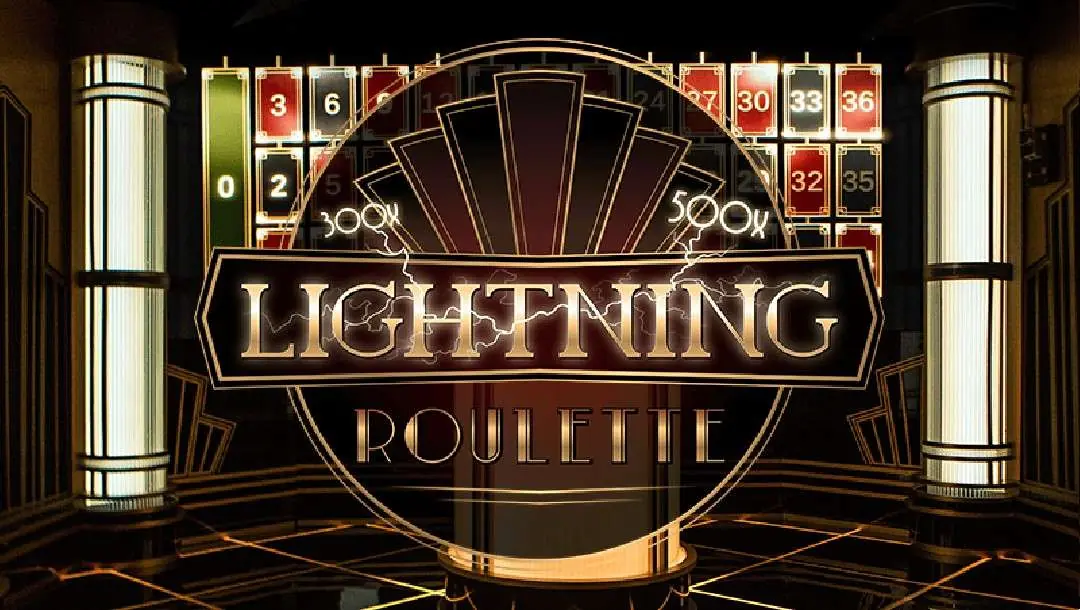
Original Lightning Roulette keeps a single-zero physical wheel but adds randomly selected enhanced numbers. To receive a lightning award, your straight-up wager must cover the number that both receives the enhancement and becomes the wheel’s winning result. A red bet or split covering that number does not receive the same enhancement.
The trade-off sits in the ordinary straight-up payout. An unenhanced winning number pays 29:1 rather than the conventional 35:1. The original game’s lightning awards range from 50x to 500x total return on the qualifying stake; that is not a multiplier applied to an ordinary 35:1 win. Its straight-up RTP is 97.10%, compared with 97.30% for the other ordinary bet types.
That makes Lightning a presentation and payout-distribution choice, not simply standard roulette with a free upgrade. A large highlighted number has no value to a wager that does not qualify, and an ordinary winning straight-up produces a smaller return than it would at the conventional table.
The original version suits someone specifically interested in occasional enhanced straight-up awards and willing to understand the reduced base payout. If your plan is simply to place an outside bet, the feature is largely something to watch rather than an improvement to that wager.
Keep the full title in view when comparing games. XXXtreme Lightning Roulette and other branded follow-ups are separate products; their feature details should not be substituted into an explanation of the original. A similar set, logo or lightning animation does not prove that the same payout table applies.
For a different kind of spectacle, live Game Shows can build play around bonus stages rather than the numbered pockets of roulette. Crazy Time is one example of that broader format. Compare the base wagers and the conditions for entering a feature rather than assuming that every wheel game works like European roulette.
Six live roulette formats compared
This selection illustrates different changes to the roulette experience: camera treatment, pace, automation and enhanced payouts. It is not a popularity ranking or a list of games guaranteed to be available at every British casino. Start with the feature you actually want, then inspect the exact table offered by your operator.
| Game | Provider | Main distinction | What to check |
|---|---|---|---|
| Immersive Roulette | Evolution | Multiple camera angles and slow-motion replay | Conventional single-zero rules; camera work does not improve return |
| Speed Roulette | Evolution | Faster sequencing, with betting during the spin | Whether the shorter preparation window suits your betting layout |
| Auto Roulette | Evolution | Physical automated wheel without a dealer | European, French or American rules; do not infer them from “Auto” |
| Original Lightning Roulette | Evolution | Random enhanced straight-up awards | Reduced ordinary straight-up payout and separate bet-level returns |
| Original Quantum Roulette | Playtech | Straight-up enhancements and a Quantum Boost event | The precise edition and its own payout rules |
| Mega Roulette 3000 | Pragmatic Play | Random Mega Lucky Numbers with enhanced straight-up awards | Which wager or mode a displayed return figure describes |
For a clearer view of a conventional game
Immersive Roulette’s strongest distinction is visual: the cameras and replay make the wheel more prominent. It remains a useful example of separating production quality from game mathematics. Choose it because you prefer following the ball, not because a close-up is evidence that your next bet is more likely to win.
Speed Roulette and Auto Roulette answer different preferences. Speed changes the rhythm; Auto removes the dealer from a physical-wheel format. Someone who values conversation may find automation less appealing, while someone who mainly wants the wheel and layout may not miss it. Neither preference requires a claim that one format is more trustworthy.
For a different enhancement system
For a comparison with Lightning, the original Quantum Roulette game adds its own straight-up enhancements and Quantum Boost event. Quantum Boost can randomly increase some or all of the multipliers already assigned to numbers for that round. It is an additional enhancement of selected awards, not a way to change the wheel result. Read Quantum’s own qualification and ordinary-win rules rather than carrying over Lightning’s base payout or return.
Mega Roulette 3000 uses randomly selected Mega Lucky Numbers to enhance qualifying straight-up awards. A chosen number still needs to be the wheel result for that enhancement to pay. Its feature presentation therefore needs to be read alongside the actual wager, not as a bonus for every chip covering the winning number. The original Mega Roulette and the 3000 edition are separate versions; check the edition and bet type before comparing a displayed return.
Providers and casinos do different jobs
The supplier creates and operates the game product; the casino is the business with which you hold the player account. The supplier Evolution provides several of the roulette formats above, while Playtech and Pragmatic Play offer their own designs. Sharing a supplier does not make different casinos identical places to deposit or request a withdrawal.
When comparing a Live Casino with another operator, keep separate notes for the table and the business holding your account. The table comparison concerns rules, payouts, controls and presentation. The operator comparison concerns its licence, account terms, available payment methods, complaints process and any promotion you might accept. A strong impression of the studio cannot answer those account questions.
Keep the exact game title with your comparison notes. A supplier’s conventional table and enhanced straight-up product can have different cost profiles, even when their betting grids look alike.
Table limits, pace and exposure
Check the current limits panel before placing anything. The smallest chip, the minimum total inside stake and a minimum outside wager need not be the same thing. Maximums may also differ by bet type. There is no reliable category-wide minimum that can be applied to every live roulette table or currency.
Count the complete layout, not just the most memorable chip. Five £1 straight-up wagers make a £5 round. Repeat that layout across 40 paid rounds and you have staked £200, not £40. A series of small individual chips can therefore commit more money than a casual glance suggests.
| Total stake per round | Paid rounds | Turnover | Theoretical loss, rounded |
|---|---|---|---|
| £1 | 40 | £40 | £1.08 |
| £1 | 80 | £80 | £2.16 |
| £5 | 40 | £200 | £5.41 |
The examples hold the standard single-zero rules constant. More paid rounds or a larger layout increases turnover; a faster table does not need a higher house edge to cost more over a session. Conversely, skipping rounds reduces the amount staked without requiring you to find a supposedly lucky dealer or betting pattern.
Choose a pace that leaves time to read and correct the layout. Repeating a saved bet can be convenient, but inspect it again after a denomination change. For British-licensed online casino play, you must commit to each game cycle individually; a global game manual showing autoplay controls is not evidence that they should be available in your UK version.
Mobile, interruptions and settlement
On a phone, the useful question is whether the controls remain clear while the wheel, chat and information panels compete for space. Check that you can distinguish a straight-up placement from a split, see the total wager, and open the paytable without accidentally adding chips. A large video window is not an advantage if it leaves the actual betting layout cramped.
Try changing the viewing orientation before you commit a wager, where the interface permits it. Confirm that the closing signal remains visible and that you know how to undo an unintended selection during the betting period. Do not assume a screenshot represents the layout, currency or limits that your own device will show.
If the stream stalls, avoid guessing whether a wager went through. Stop adding bets, reconnect and check the round history and account record. A local connection loss is not the same as a malfunction of the game itself. Accepted bets can remain valid and settle while you are disconnected, whereas an invalid round may be handled differently under the game’s rules.
For a disputed result, retain the table name, round identifier, approximate time and the relevant transaction or history entry. Explain whether the problem was a rejected wager, a missing settlement or an unclear video display. Those are different issues, and a precise account of the event is more useful than a general claim that the wheel looked wrong.
Do not make another wager merely to test whether the connection has recovered. Wait until you can follow the display clearly, and resolve any uncertainty about an accepted bet through the history or operator support.
Strategy: what you can and cannot control
Your meaningful choices are the ruleset, wager type, total stake and amount of play. On a fair independent wheel, a history of red results does not make black due. Red and black each cover 18 of the 37 single-zero pockets, so neither is a true 50% proposition. Zero is the reason the apparent pair does not split the outcomes evenly.
Hot-number lists and racetrack patterns describe past results or chosen coverage, not a prediction. If you would rather make decisions during the hand, live Classic Blackjack offers a different kind of involvement through hitting, standing, doubling or splitting. Roulette gives you no comparable tactical decision after betting closes: changing the stake pattern does not become a skill that influences the next pocket.
Staking systems change the shape of your exposure. A doubling sequence starting at £1 would move through £2, £4, £8, £16 and £32 after losses. Losing those six wagers costs £63, and the next £64 wager would require £127 of total funding to reach. That is a demonstration of escalating risk, not a recommendation to follow the sequence.
A table maximum or personal budget can stop that escalation before a recovery, and another losing result remains possible. Slower progressions do not fix the underlying problem: the payout and winning probability have not improved. Keeping a modest fixed total stake makes the cost easier to understand, but it is still gambling with a negative expectation.
Can a winning spin still lose money?
Yes. Consider £1 on red, £1 straight-up on red 17 and £1 straight-up on red 19 at a conventional European table: £3 staked altogether. If a different red number lands, the red bet returns £2 while both straight-ups lose. One wager has won, but the round has a £1 net loss. If 17 or 19 lands, the straight-up returns £36 and the red bet returns £2, giving £38 back and £35 net profit. If black or zero lands, all three wagers lose. Judge the complete round, not just the winning chip.
Would another live game suit you better?
Roulette suits someone who wants to choose a layout and then watch a single result. If the decision-based alternative appeals, compare how Live Blackjack works across its different formats before choosing a table. Check the permitted decisions and optional side bets separately; a familiar card layout does not mean every version offers the same choices or wagers.
The distinction is useful when roulette feels passive: a card game can ask you to act during the round. That also means learning its rules. More interaction is a preference, not proof of a better return or a reason to spend more.
Enhanced roulette sits between those preferences: it retains the familiar numbered layout while adding another award mechanism. Decide whether you want to follow that extra layer. There is little benefit in choosing a complicated presentation if the additional displays make it harder to understand which of your bets can actually win.
Choosing a UK live roulette casino
Begin with the operator behind the website, not the appearance of its live lobby. For play offered to consumers in Great Britain, check the relevant business and website details in the register provided by the Gambling Commission. A familiar supplier’s game or a licence image in a footer does not by itself establish the status of the casino holding your money.
Next, check that the exact table you want is available through that account, with a manageable minimum and accessible rules. A provider catalogue describes products; it does not prove that every casino carries each one. An operator’s actual lobby and terms are more useful than an undated claim that it has all the major roulette variants.
What fairness controls do—and do not—tell you
British live-dealer standards require operations to be fair and independently auditable. They address staff training, equipment integrity, surveillance, access controls and game records. This is a more useful basis for assessing oversight than assuming that a visible wheel cannot have a technical problem.
Regulation does not guarantee a winning session or certify every promotional claim made about a game. Check the operator’s complaints route and interruption policy as well as its licence. Age and identity checks should take place before gambling; they are part of the account process, not a reason to trust an unlicensed alternative offering fewer questions.
Read bonus terms separately from game rules
A casino promotion is a separate agreement from the roulette paytable. Before accepting one, check whether live roulette is eligible, how qualifying wagers contribute, and which stake limits, expiry dates or betting restrictions apply. Do not assume that a roulette wager clears an offer in the same way as another casino game.
For the wider principles, the guide to Casino Bonus Wagering terms can help you identify the relevant clauses, but the actual offer controls. A low advertised wagering requirement is not enough if the game you want is excluded. If the terms are unclear or conflict with the way you intended to play, leaving the promotion unused is a reasonable choice.
Set session boundaries before joining
Choose an affordable loss limit and a stopping time before opening the table. Use the account’s financial-limit tools, but remember what each one measures. A deposit cap restricts money going into the account; it does not necessarily cap the total value of bets placed using returns already in the balance.
Keep those boundaries independent of recent results. A near miss, a run of losses or another player’s visible award is not a reason to increase the budget. If you find yourself trying to recover money, pause the session and use a time-out or account restriction. Contact the operator’s safer-gambling team if you need help applying those controls.
It is also worth planning the exit rather than only the opening bet. Close the table when the time or money boundary is reached, even if another round is about to start. The continuing stream can make stopping feel like interrupting something unfinished, but you do not need to participate in its next result.
Our verdict on live roulette
For a clear introduction, conventional single-zero roulette is the most straightforward format in this comparison. For even-money wagers, a genuine La Partage rule offers a lower theoretical cost. Choose Immersive for its view of the wheel, Speed only if its rhythm suits you, and enhanced games only after understanding what they change about payouts.
Whichever roulette table you choose, keep the same order of priorities: understandable rules, affordable total stakes and an appropriately licensed operator. Studio polish comes after those checks. The best fit is a table whose costs and controls you can explain—not one that seems to promise a way around the mathematics.
Live Roulette FAQ
Among the conventional rules compared here, eligible even-money wagers with La Partage have a 1.35% edge. Standard single-zero bets have a 2.70% edge. La Partage does not improve straight-ups, dozens or columns, and a lower theoretical edge does not prevent losing a session.
Usually, but not always. Auto Roulette uses a filmed physical wheel with an automated ball launch and no live dealer. An animated RNG roulette game is different: the visual wheel does not itself establish that a physical event is being broadcast.
Not in original Lightning Roulette. The enhanced number must be both the wheel result and covered by your qualifying straight-up bet. A red or split wager covering it is paid under its own ordinary rules.
No. That figure applies to its ordinary conventional bets. The five-number basket covering 0, 00, 1, 2 and 3 pays 6:1 and has a 7.89% edge. Compare the actual wager instead of treating the table’s headline return as universal.
An accepted wager can remain valid and settle while you are disconnected. Check the game history after reconnecting and use the operator’s interruption policy for the specific situation. A local stream problem and an invalid game round are not the same event.
There is no single minimum across the category. Read the current table limits and check whether they apply to each outside wager, total inside stake or another condition. Several small chips can add up to a larger total bet than the chip denomination suggests.