Pirate Slots
Best Pirate Slots



What counts as a pirate slot?
A pirate slot is a theme category, not one particular game or set of rules. The defining ingredients are seafaring characters, ships, treasure hunting or a pirate story. Those ingredients may be decorative, or they may explain a mechanic: a map records progress, a compass directs wilds, or treasure bags display cash values. Two games can look closely related while paying wins in completely different ways.
The distinction matters when you browse Adventure themed slots more broadly. A jungle expedition and a voyage with pirates can both involve treasure, but the setting alone does not establish a common bonus system. Start with the game's full title and supplier, then look at what makes a combination pay. A familiar chest icon is not a reliable shortcut to understanding the rules.
The game grid on this page contains Pirate Gold Deluxe, Pirate Pays, Captain’s Treasure and Pirates’ Plenty. The comparisons below also discuss other pirate-themed releases, so the article is broader than the on-page selection. A listing here is not confirmation that a particular casino currently offers the game, that its demo will launch in your location, or that every version uses the same return percentage.
Our selection method is to compare different ways the theme is used, rather than declare one universal winner. The useful question is whether you want recognisable line wins, a changing reel layout, a collection feature or a map-led bonus. None of those preferences makes a slot profitable or removes the possibility of losing the money staked.
The sea itself is not enough for inclusion. Push Gaming’s Razor Shark is an underwater game built around mystery symbols, rather than a pirate story. It is a useful comparison if you want a marine setting without the crew-and-treasure-map theme; our Razor Shark slot review covers that alternative.
Pirate slot games compared
These examples earn their place by offering distinguishable mechanics. The table identifies the exact edition and the feature worth understanding first; it is not a popularity ranking or a claim that the games have been tested on every device. Read the selective profiles underneath for the trade-off that is easiest to miss in a short casino description.
| Game | Supplier | What distinguishes it | Point to understand first |
|---|---|---|---|
| Pirates’ Plenty: The Sunken Treasure | Red Tiger | Fixed paylines with map progress unlocking a sixth reel | The original is not a Megaways game |
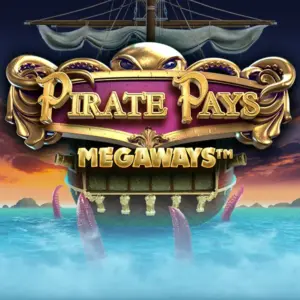
| Pirate Pays | Big Time Gaming | Up to 117,649 Megaways and Kraken free-spin offers | The maximum ways figure is not the layout on every spin |
| Pirate Gold Deluxe | Pragmatic Play | 40 paylines and treasure-bag respins | A named Grand prize is not automatically the overall win cap |
| Cursed Seas | Hacksaw Gaming | Cursed positions and reel multipliers | The feature is about position values, not a simple ship battle |
| Dead Man’s Trail | Relax Gaming | 40 fixed lines and a map-based Trail Bonus | Progress along the trail can end as well as award prizes |
| Pirates’ Plenty: Treasures of the Seas | Red Tiger | Chest unlocks and locking-wild bonus rounds | This is a separate sequel with its own rules and RTP versions |
Pirates’ Plenty: map progression
The original Pirates’ Plenty begins with a five-reel, three-row layout and 20 paylines. Map pieces unlock the sixth Treasure Reel; Red Tiger describes that reel as staying unlocked. The normal game also includes a Monkey Wild that removes low-paying symbols, while the Ocean Spins feature introduces keys and treasure chests.
The appeal is a visible progression system layered onto line-based play. The limitation is equally important: a partly completed map can make stopping feel premature. Treat that progress as part of the presentation and rules, not as a reason to exceed the limit you set before playing. Do not transfer the sequel's chest system onto this edition. For this original edition, our full write-up provides a separate game-level guide.
Pirate Pays: changing ways and bonus offers
The six-reel Pirate Pays uses a variable Megaways layout. Its compass wilds act directionally, and the Kraken Bonus presents free-spin offers. The game help says rejecting an offer continues the elimination process; if only two outcomes remain, a chest determines the award randomly. A Purple Chest Megascatter can instead activate the enhanced version of the bonus.
This is a more involved ruleset than a straightforward line slot. We would put understanding the offer screen ahead of chasing its most dramatic result: the offer combines different elements, and declining it is not proof that the next outcome will be better. Pirate Pays requires close attention to the instructions; negotiating should not be assumed to create a dependable advantage.
Pirate Gold Deluxe: treasure-bag respins
The Deluxe game uses a five-reel, four-row layout. Eight or more Money Symbols start its Re-Spin Bonus, retaining the bags already present. The initial three respins reset when another qualifying bag lands, while the bags can add values, retriggers or multipliers. That makes the remaining empty positions and respin counter central to following the round.
It is the clearest example here of the theme explaining a collection feature: treasure bags are the objects being accumulated. However, a nearly full board does not promise that the missing bag will arrive. Assess whether you enjoy this repeated collection pattern; do not confuse the visual tension near the end with a reliable signal of the next result.
Cursed Seas: persistent positions
Hacksaw's Cursed Seas uses a five-reel, four-row setup. Chests release a curse upwards, with cursed positions persisting in Sunken Treasure. Its Dead Men Tell No Tales feature builds multipliers above the reels; active cursed positions receive their corresponding reel values when the lives run out. The provider advertises a maximum win of 12,500x the stake, not a typical bonus result.
This is a darker interpretation of the theme, closer in mood to Horror slots than a light-hearted treasure hunt. It is worth considering only if the position-and-multiplier display makes sense to you. The artwork may be the initial attraction, but reading which positions count is more useful than following the spectacle alone.
Dead Man’s Trail: a map-led bonus
Relax Gaming uses the pirate setting to turn a bonus into a journey. Three Bonus symbols activate the Trail Bonus, where movement across a map encounters tile effects including multipliers, collections, coin prizes and doom. The base game uses 40 fixed lines and also has a Coin Feature triggered by coins appearing on three or more reels.
This is a useful contrast to a stationary respin board: you follow a route and its consequences. The drawback is that the map adds another layer to learn beyond the base paytable. Choose it for that narrative structure, not because travelling further looks like building an entitlement to a final treasure.
Treasures of the Seas: a separate sequel
The later Pirates’ Plenty: Treasures of the Seas uses map progress, chest benefits and locking wilds, but it is not simply the original game with refreshed artwork. Its Free Spins begin with three spins, and newly landed wilds lock and reset that counter. Treasure Spins extends the system with additional wild positions and chests.
The important comparison is how the feature develops, not whether the name sounds familiar. This sequel puts more emphasis on unlocking benefits around persistent wilds. A reader returning to the original should therefore check the full subtitle before relying on remembered features, a saved favourite or an RTP figure copied from another edition.
Symbols and bonus mechanics: what actually changes the result?
It helps to distinguish a retained position from a moving symbol. In Walking Wilds slots, a wild changes position between respins; a locking wild stays in its retained position for the specified feature. Ask whether a symbol moves, stays or disappears, rather than treating every persistent symbol as the same mechanic.
Start by separating ordinary paying symbols from feature symbols. A captain might be a high-paying icon in one game and part of a bonus animation in another. A chest might trigger a feature, carry a cash value or sit outside the reels as a progress indicator. The paytable, rather than the picture itself, explains what counts.
The same care applies to slot bonus features generally. A wild substitutes according to its specific rules; a scatter may trigger a feature without following a payline. Neither label tells you everything about where the symbol can appear or what it can replace. Pirate Pays, for example, gives its Compass Wild a directional function rather than making it a generic substitute everywhere.
| Mechanic | Question to ask | Misreading to avoid |
|---|---|---|
| Fixed paylines | Which paths and directions count? | Assuming matching symbols anywhere form a win |
| Megaways | How does the current reel layout determine ways? | Treating the advertised maximum as a constant |
| Persistent wilds or positions | What remains, and for how long? | Assuming a feature survives every mode change or new visit |
| Respin collection | What resets the counter and what ends the round? | Reading a nearly full board as a guaranteed completion |
| Progress maps | What does reaching the next marker actually unlock? | Continuing solely to finish a visible journey |
Multipliers need an equally careful reading. A figure above a reel might apply to selected positions, a particular win or a feature total. Those are different calculations. Before comparing multiplier slots, establish how the mechanic works: what the multiplier acts on and whether values add or multiply together. A larger number on screen is not necessarily a larger final award than a smaller number with a different scope.
Pirate slots RTP: compare versions, not just percentages
Return to player, or RTP, describes a game's theoretical long-run return from total stakes. It does not predict how much you will recover from a deposit. The distinction becomes especially important when winnings are staked again: total turnover can exceed the original amount deposited. Our RTP explanation separates that long-run calculation from the balance changes an individual sees.
The figures below are published by the suppliers, with Pirate Pays also supported by its game help. This is a small, identified sample, not a category average or a ranking of every pirate slot. The two figures for Treasures of the Seas are separate published versions; they should not be blended into a single return.
| Exact game | Published RTP | Evidence basis |
|---|---|---|
| Pirate Pays | 96.23% | Game help and Evolution's Big Time Gaming catalogue |
| Pirates’ Plenty: The Sunken Treasure | 95.70% | Red Tiger and Evolution catalogue information |
| Pirates’ Plenty: Treasures of the Seas | 96.20% / 93.17% | Two versions listed in Evolution's catalogue |
For an arithmetic illustration, £100 in total stakes at 96.23% RTP implies £3.77 in expected loss. The equivalent is £4.30 at 95.70%, or £6.83 at 93.17%. These are mathematical expectations, not forecasts for a particular session: actual losses can be much larger, and the entire amount available for play can be lost.
A search for the highest RTP slots should therefore end at the exact game's help screen, not at the largest percentage in an article. Check the full title, edition and return shown where you intend to play. A provider's catalogue establishes that a version exists; it does not establish which configuration a particular casino is offering today.
Nor should RTP be used to decide when to stop. A run of losses does not make a random game owe you the difference between your current balance and its advertised return. The sensible use of the figure is comparison before play, alongside the rules and possible cost, rather than trying to make a short session match a long-run percentage.
Volatility and maximum wins: a different part of the comparison
Volatility describes how widely results can vary, rather than the same thing as RTP. A game with rare large prizes can produce a very different experience from one emphasising smaller, more frequent awards. Neither pattern guarantees a comfortable session. Supplier descriptions also need care: “high” from one studio is not a shared numerical scale that precisely ranks every other studio.
The documented sample leans towards pronounced swings. Evolution labels original Pirates’ Plenty High, Pirate Pays High / Extreme, and Treasures of the Seas Extreme; Hacksaw describes Cursed Seas as highly volatile. These are supplier classifications, not scores from our own sessions. Our slot volatility guide explains the distinction without turning a label into a promise about how often your next game will pay.
Maximum-win language creates another trap. Red Tiger lists 4,359x for the original Pirates’ Plenty. In Pirate Gold Deluxe, filling all 20 positions is associated with a Grand award of up to 1,000x; that statement does not establish the game's overall cap. Comparing these numbers as if they measure the same thing would produce a misleading ranking.
The sequel offers an even clearer example: when Kidd's Treasure is awarded, it brings the bonus-round total to 20,000x. It is not an extra 20,000x added on top of the amount already accumulated. Look for whether a headline describes a named prize, a feature total or the entire game's maximum before drawing a comparison.
Also distinguish fixed named prizes from progressive jackpots. Pirate Gold Deluxe describes a Grand award for filling its board, but the word “Grand” alone does not establish a jackpot that grows with wagers. In progressive slots, contributions from stakes increase the prize from a preset starting value; eligibility and award rules need separate attention. Do not use jackpot branding as a substitute for reading how the prize is funded and awarded.
For player fit, the practical decision is whether the risk and complexity are acceptable at all. Do not choose a high-volatility game simply because a larger maximum looks attractive, or increase the stake to make a small prize feel significant. A lower stake limits the money exposed on each paid cycle; it does not change the game into a reliable source of returns.
How the studios use the pirate theme
The useful differences between suppliers are visible in these games' rules. Big Time Gaming makes the changing ways system and bonus offers central to Pirate Pays. Red Tiger's examples use progression around reels and chests. These are observations about the named titles, not a claim that every release from either studio follows the same template.
For the treasure-bag approach, Pragmatic Play places collection and respin resets at the centre of Pirate Gold Deluxe. That makes it a useful comparison with a map-led feature: one asks you to follow the remaining board positions, while the other asks you to follow a sequence of events. The choice is about which rules you prefer to interpret.
The contrast becomes clearer with Relax Gaming's Dead Man’s Trail and Hacksaw's Cursed Seas. A journey across a map and multipliers attached to cursed reel positions are not interchangeable ideas, even though both fit a darker seafaring story. Browsing slots by Relax Gaming can help place the former within that supplier's wider work, but each game's own help remains the relevant rules reference.
Names, sequels and release dates matter
Small title differences can identify substantial changes. Original Pirates’ Plenty is a 2019 release; Pirate Gold Deluxe was announced in November 2020; Pirate Pays is listed by its supplier as a 2021 game. Those dates refer to the games, not the date a review was published, a demo page was added or a casino began offering them.
The later Treasures of the Seas arrived in December 2025. It belongs in a comparison as a distinct edition, not as evidence that the original Pirates’ Plenty has changed its RTP or bonus rules. Likewise, “Deluxe” should not disappear when copying a title into a search box. Match the full name and supplier before trusting a specification.
This is also why a newer release is not automatically the better option. A new subtitle may introduce a more complicated feature that you do not want. Conversely, a familiar name may hide the very difference you were looking for. Compare the actual rule changes instead of treating recency, a revised thumbnail or a larger headline prize as a quality score.
What a pirate slot demo can and cannot show
A demo can help you locate the paytable, distinguish ordinary symbols from feature symbols and follow a bonus explanation without risking money. It cannot demonstrate what you will win with real stakes. A dramatic free-play outcome is an example of a possible result, not evidence that the same sequence will occur after a deposit.
For corresponding free and real-money games on the same website, the regulator's standards require the same rules and a reasonable representation of winning likelihood and prize distribution. That is narrower than assuming a demo on a supplier's separate site proves the configuration at every casino. Promotional footage is narrower still: it may show selected or accelerated highlights rather than ordinary play.
Access also has limits. British licensees must verify age before allowing access to their free-to-play games, and consumer-facing affiliate arrangements are covered by the regulator's guidance. Do not assume that “free” means anonymous access or that a review's demo button will work in every location. A supplier presentation intended for business customers is a different context.
Use any permitted demo with a clear question in mind: can you identify why a result pays, what persists and what ends the feature? If the answer remains unclear, reread the help rather than watching indefinitely for a dramatic bonus. Learning the interface is useful; treating the demo balance as a prediction is not.
Mobile readability: check the information around the reels
A pirate scene can fill a small screen with ships, maps and animated treasure. The useful mobile check is whether the rules and current values remain legible, not simply whether the game opens. Inspect the stake display, current win, balance and help controls before deciding that a layout is comfortable for you.
When comparing slots with Random Wilds with games that retain locked positions, concentrate on duration. A newly introduced wild and one retained for later spins create different displays to follow. Do not assume that a retained symbol remains active after the feature ends, or that an unlocked element follows you to a different casino. Check the game's rules on persistence and any reset conditions.
Different features put pressure on different areas of the display. In Pirate Pays, the changing layout and offer screen need attention. A collection game needs a readable counter and clearly marked retained symbols. A map feature needs enough detail to distinguish progress from an actual credited award. Treat those as a checklist, not as claims that we have measured these games on your phone.
When choosing the right slot, include accessibility in the decision. Can you read small values without guessing? Can you find the rules without pressing the paid-spin control? Are you relying on sound to understand what happened when you would normally play muted? An appealing theme is a poor substitute for an interface you can follow confidently.
If the presentation feels too busy, the presentation of Fruit slots may offer a useful visual comparison, but it is not evidence of simpler mathematics or lower risk. Check the rules independently of the artwork. Stop using a layout that makes the stake or feature state difficult to read; do not solve that problem by playing faster or relying on animation alone.
Choosing a casino and reading bonus terms
Finding a pirate title in a lobby is only the first check. Confirm the exact edition, read its help and inspect the operator's terms before depositing. A supplier name on a game is not a substitute for checking the operator and its licence. This guide does not promise that any particular operator currently stocks all of the examples discussed.
A casino promotion is also separate from an in-game feature. Pirate Gold Deluxe's respins are part of its rules; free spins offered by an operator come with that promotion's conditions. Do not assume that a similarly named reward has the same cash value, eligibility requirements or withdrawal treatment as a feature triggered during ordinary play.
Before accepting an offer, work through its casino bonus wagering terms: eligible games, contribution rates, maximum permitted stake, expiry and any restrictions on withdrawing bonus-derived funds. A pirate theme does not determine whether a game contributes or is excluded. The operator's actual offer terms, not the artwork or the review category, control that question.
There is no need to accept a promotion simply to play a particular theme. If the conditions are unclear or encourage more play than you intended, leaving the offer alone is a valid choice. Judge the commitment involved before focusing on the advertised number of spins, and do not assume a bonus changes the underlying game's odds in your favour.
Great Britain rules and keeping the cost bounded
For adults playing online slots in Great Britain, the maximum total stake per game cycle is £5 at ages 25 and over, or £2 at ages 18–24. These are regulatory ceilings, not suggested amounts to spend. A lower personal limit can be appropriate, and a slot may offer a narrower range of stakes than the legal maximum.
The current Gambling Commission rules also require a separate commitment to each game cycle, rather than autoplay of new paid spins. There must be at least 2.5 seconds before the next slot cycle can begin. International help screens can describe features that are restricted by jurisdiction; do not assume that every option shown in overseas material is available in a British casino.
Set a money limit and a stopping time before starting, using only money you can afford to lose. Keep the cost visible rather than converting it mentally into bags, coins or map steps. If gambling begins to affect essential spending, relationships or your ability to stop, stop playing and seek independent support.
Progress features deserve a specific stopping rule: unfinished does not mean you must continue. A chest that is almost unlocked or a route that is almost complete can make additional paid spins feel necessary. They are still additional stakes. Do not increase a limit to complete the picture, recover a previous loss or reach the headline prize described in a review.
A losing sequence is not a countdown to a compensating win. Random online games are not permitted to adapt their probabilities simply to repay earlier losses. A rule-defined bonus can change the active rules when triggered, but that is different from assuming the base game has become “due”. Keep that distinction in mind whenever a progress display makes another spin feel compelling.
Our verdict on pirate-themed slots
The strongest reason to explore pirate slots is that the theme supports genuinely different game structures. The comparison is useful when it helps you tell a collection board from a map bonus, a fixed-payline original from a separate sequel, or a published RTP version from the configuration actually offered where you play.
Our preference is to choose by understandable rules and acceptable cost before artwork or maximum-win claims. Use the grid as a starting point, match the complete game name, read the paytable and decide whether its complexity suits you. If the presentation encourages you to chase an unfinished feature or you cannot comfortably afford the stake, the better decision is to stop rather than find another treasure hunt.
Pirate Slots FAQ
They are a category built around pirates, ships and treasure hunting. Pirate Pays, Pirate Gold Deluxe and Pirates’ Plenty are separate games from different suppliers, with their own rules. The shared setting does not give them a shared RTP or bonus system.
No. Pirate Pays uses Megaways, while original Pirates’ Plenty uses 20 fixed paylines before its extra Treasure Reel is unlocked. Check the exact title and pay system rather than assuming that a larger reel display means Megaways.
Among the three exact titles in our RTP table, Pirate Pays has the highest listed figure at 96.23%. That is not a ranking of every pirate slot, and a published percentage does not guarantee the configuration or return where you play.
Do not assume so. British licensees must verify age before access to their free-to-play games, and consumer-facing affiliate arrangements are also covered by regulator guidance. Access depends on the site and location; a free demo does not guarantee anonymous play.
No: keep the Deluxe name when identifying the game. The edition discussed here has 40 paylines and treasure-bag respins. Do not substitute specifications from another Pirate Gold title simply because its name or artwork looks similar.
No. A map can track a genuine feature unlock, but unfinished progress does not make a random game owe you a win. Follow the specific rules and keep your original stopping limit; do not add stakes merely to finish the display.